
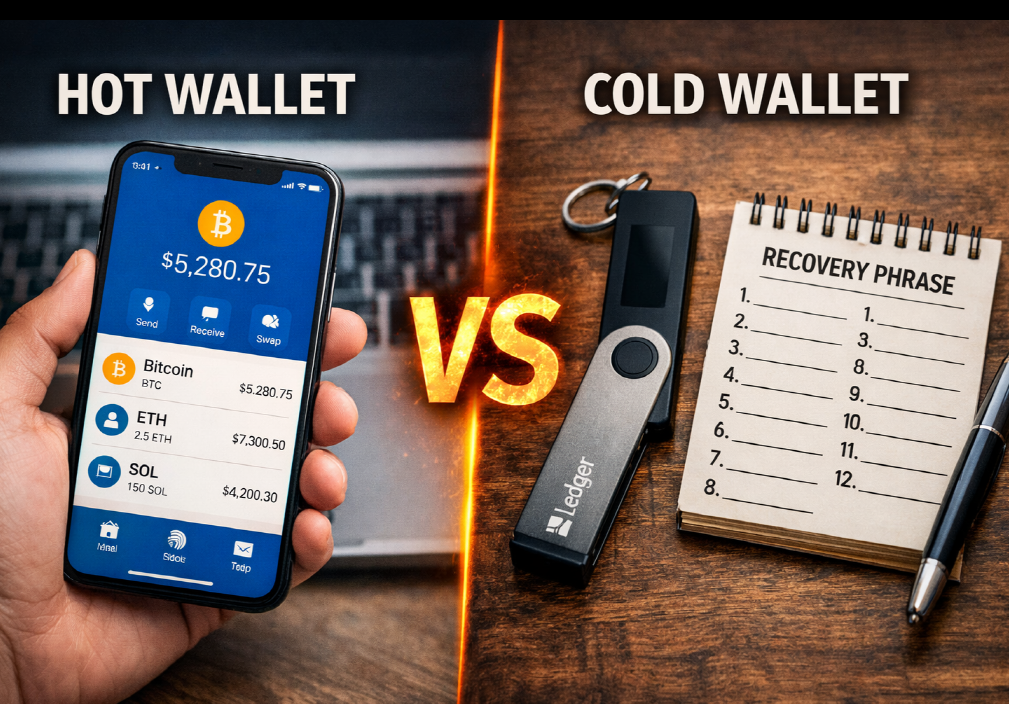
If you’re searching for the best crypto wallets 2026, this guide explains the difference between hot and cold wallets and helps beginners choose a safe place to store their cryptocurrency.
If you already know what cryptocurrency is and how to buy it safely, the next question usually comes up pretty fast:
“Okay… where do I actually keep this stuff?”
A lot of beginners don’t lose money because they chose the wrong coin. They lose it because they clicked the wrong link, downloaded a fake app, or stored their recovery phrase in the wrong place.
In this guide, I’ll walk you through:
- What a crypto wallet really does (in plain English)
- The difference between hot wallets and cold wallets
- The wallets beginners tend to like most in 2026
- How to pick something that fits how you plan to use crypto
If you haven’t bought crypto yet, this step-by-step beginner’s guide to buying cryptocurrency safely in 2026 will save you a lot of stress later.
What Is a Cryptocurrency Wallet? (Best Crypto Wallets 2026 for Beginners)
A crypto wallet doesn’t actually “hold” your coins. That part confuses almost everyone at first.
Your crypto lives on the blockchain.
Your wallet just holds the private key — basically the password that proves those coins belong to you.
An easy way to picture it:
- The blockchain is a huge digital vault
- Your wallet is your personal key to one small section of it
Lose that key, and there’s no “forgot password” button. That’s why wallets matter so much.
Hot Wallet vs Cold Wallet (Quick Overview)
Hot Wallets — Easy and Always Online
Hot wallets are connected to the internet. They’re what most people start with.
Good for:
- Checking balances quickly
- Sending and receiving crypto
- Small amounts you use often
Why people like them:
- Simple setup
- Fast to use
- Usually free
Downsides:
- More exposed to phishing and fake apps
- Security depends on your phone or browser
Cold Wallets — Offline and Built for Safety
Cold wallets stay offline. Think of them more like a safe than a wallet.
Good for:
- Long-term storage
- Larger amounts of crypto you don’t touch often
Why people like them:
- Very hard to hack remotely
- Great peace of mind
Downsides:
- You usually have to buy the device
- Takes a little longer to use
Best Hot Wallets for Beginners in 2026
Trust Wallet
Best for: Simple mobile use
Trust Wallet is often the first wallet people try. It’s straightforward, supports most popular coins, and doesn’t overwhelm you with settings.
What stands out:
- Free and quick to set up
- Supports Bitcoin, Ethereum, and many tokens
- Built-in swaps and basic staking
MetaMask
Best for: NFTs, DeFi, and exploring Web3
If you plan to touch NFTs or decentralized apps, you’ll probably run into MetaMask sooner or later.
What stands out:
- Works on browsers and phones
- Connects to most Web3 platforms
- You stay in control of your keys
Coinbase Wallet
Best for: Moving away from exchanges
If you already use Coinbase, this wallet feels familiar but gives you more control than leaving funds on the exchange.
What stands out:
- Easy transfers from Coinbase
- Clean, beginner-friendly design
- Supports NFTs and apps
Best Cold Wallets for Maximum Security
Ledger Nano X
Best for: Long-term holders
Ledger is popular with people who treat crypto like a long-term investment rather than something they trade every day.
Why people trust it:
- Strong security hardware
- Works with many coins and apps
- Can connect to your phone with Bluetooth
Trezor Model T
Best for: Transparency and open-source fans
Trezor is known for being open about how its software works, which a lot of security-focused users appreciate.
Why people trust it:
- Touchscreen interface
- Open-source firmware
- Long track record in crypto
How to Choose the Right Wallet
Instead of looking for the “best” wallet, ask a few simple questions:
- Will I use crypto often?
If yes, a hot wallet is more comfortable. - Am I mostly holding for the long term?
A cold wallet makes more sense. - Do I want to try NFTs or DeFi?
Something like MetaMask will fit better.
A lot of people end up using both — one for daily use, one for savings.
Safety Tips That Actually Matter
You don’t need to be a security expert. Just follow a few habits:
- Never share your recovery phrase, no matter what
- Write your backup on paper, not in cloud notes
- Double-check links before connecting a wallet
- Use hardware wallets for long-term storage
- Only download apps from official websites or app stores
You can also learn more about blockchain security basics on the official Ethereum website.
Hot vs Cold Wallet — Side-by-Side
| Feature | Hot Wallet | Cold Wallet |
|---|---|---|
| Internet | Yes | No |
| Security | Medium | High |
| Ease of Use | Very Easy | Moderate |
| Best For | Daily use | Long-term storage |
Final Thoughts
There’s no perfect wallet for everyone.
A simple, practical setup is:
- A hot wallet for everyday use
- A cold wallet for long-term holdings
That way, you don’t have to choose between convenience and safety — you get both.
FAQ
Is it safe to keep crypto on an exchange?
It’s fine for short-term trading, but if you’re holding for months or years, a personal wallet is usually the safer option.
What if I lose my wallet?
Don’t worry! If you still have your recovery phrase, you can restore everything. Without it, there’s no way to get your crypto back.
Disclaimer: This article is for educational purposes only and does not constitute financial advice. Cryptocurrency investments involve risk. Only invest what you can afford to lose.