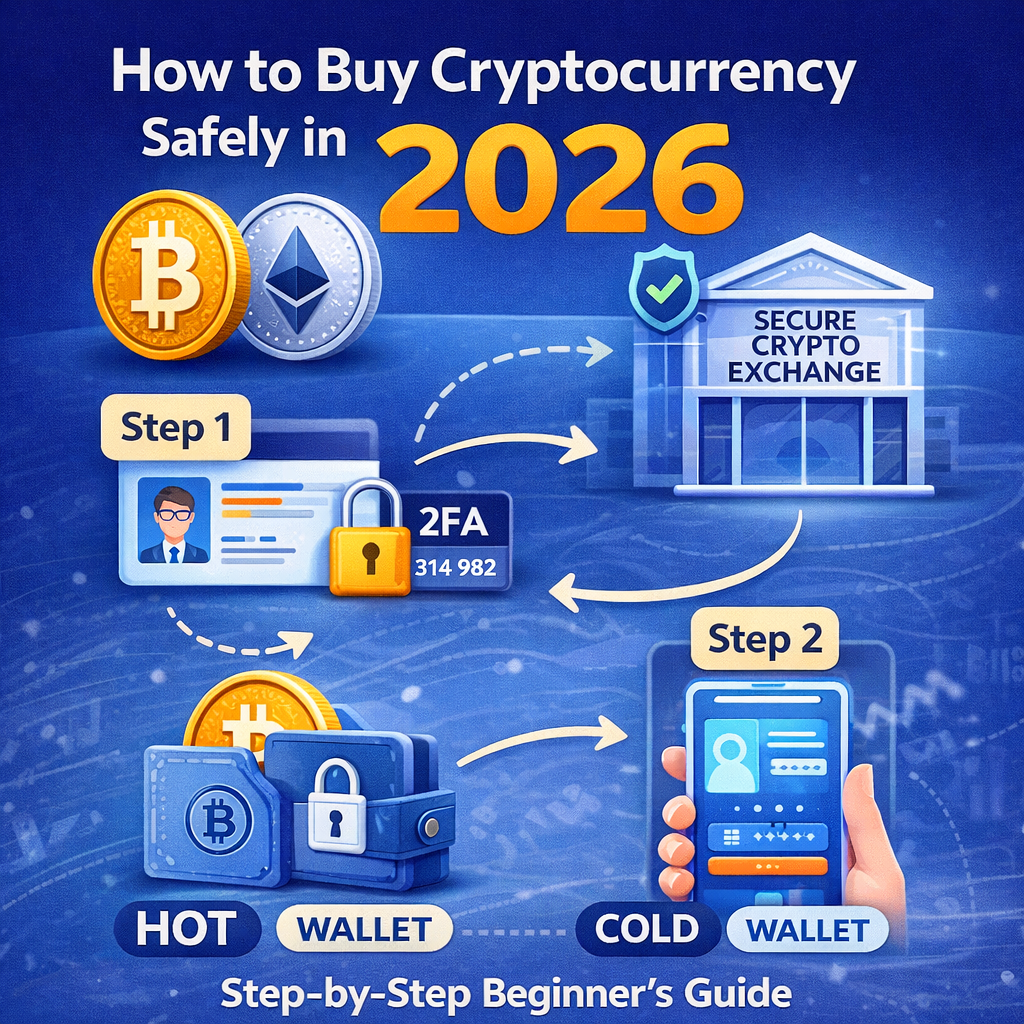
If you want to buy cryptocurrency safely in 2026, this beginner-friendly guide will walk you through every step to protect your money and avoid common scams.
Introduction: Why Safety Matters More Than Ever in 2026
Cryptocurrency has become more accessible than ever in 2026. With new investors entering the market every day, buying crypto is no longer limited to tech experts or professional traders. However, this accessibility has also attracted scammers, hackers, and fraudulent platforms.
If you are new to crypto, learning how to buy cryptocurrency safely is just as important as learning what cryptocurrency is. One wrong click, weak password, or fake website can result in the permanent loss of your funds.
In this guide, you will learn a clear, step-by-step process to buy your first cryptocurrency securely and confidently.
What You Need Before Buying Cryptocurrency
Before you buy any crypto, prepare these essential items:
1. A Secure Internet Connection
Avoid using public Wi-Fi. Always use a private and trusted network to prevent data interception.
2. A Valid ID
Most regulated crypto exchanges require identity verification (KYC) to comply with international regulations.
3. A Strong Email and Password
Use a dedicated email address for crypto accounts and a unique, complex password that you do not use anywhere else.
4. A Basic Understanding of Risk
Crypto prices can move up and down rapidly. Never invest money you cannot afford to lose.
Step 1: Choose a Safe Exchange to Buy Cryptocurrency Safely
A crypto exchange is a platform where you can buy, sell, and store digital assets. Choosing a reputable exchange is your first and most important security decision.
What to Look For in a Safe Exchange
Regulation and Compliance in major countries
Two-Factor Authentication (2FA)
Strong Security History
Transparent Fees
Responsive Customer Support
Examples of Beginner-Friendly Exchanges
Binance
Coinbase
Kraken
Bitstamp
Always double-check the website URL to avoid phishing sites. Bookmark the official site once you find it.
Step 2: Create and Verify Your Account
Once you choose an exchange, follow these steps:
Sign up using your dedicated email address
Create a strong password (12+ characters with symbols and numbers)
Enable Two-Factor Authentication immediately
Complete identity verification (upload ID and selfie)
Verification can take anywhere from a few minutes to a few days depending on the platform.
Step 3: Secure Your Account Like a Pro
Most beginners lose funds not because of bad investments, but because of poor security.
Must-Do Security Settings
Enable 2FA (Google Authenticator or Authy, not SMS only)
Activate Anti-Phishing Codes
Set up Withdrawal Whitelists
Turn on Login Alerts
These features make it much harder for hackers to access your funds even if they get your password.
Step 4: Add Funds to Your Exchange Account
You can usually fund your account using:
Bank transfer
Debit or credit card
Third-party payment services
Bank transfers often have lower fees, while cards are faster but more expensive.
Step 5: Buy Your First Cryptocurrency (Bitcoin or Ethereum Example)
For beginners, it’s best to start with well-established cryptocurrencies such as:
Bitcoin (BTC)
Ethereum (ETH)
Simple Buying Process
Go to “Buy Crypto” or “Trade”
Select BTC or ETH
Enter the amount you want to invest
Review fees and final amount
Confirm your purchase
Your crypto will appear in your exchange wallet within seconds or minutes. Following these steps will help you buy cryptocurrency safely and reduce the risk of losing your funds as a beginner.
Step 6: Store Your Crypto Safely (Hot Wallet vs Cold Wallet)
Leaving crypto on an exchange is convenient but not always the safest option for long-term storage.
Hot Wallet
Connected to the internet
Easy to use
Higher hacking risk
Cold Wallet
Offline storage (hardware wallets)
Very secure
Best for long-term investors
If you plan to hold crypto for months or years, consider using a cold wallet for better protection.
Common Mistakes Beginners Make
Avoid these costly errors:
Clicking links from emails or social media
Using weak passwords
Sending crypto to the wrong address
Investing based on hype or “guaranteed profit” claims
Keeping large amounts on exchanges long-term
Following these steps will help you buy cryptocurrency safely and reduce the risk of losing your funds as a beginner.
How Much Money Should You Start With?
A good rule for beginners is to start small. Think of your first investment as tuition for learning, not a way to get rich quickly.
If you want a deeper guide on building a beginner-friendly investment plan, read: ➤ How Much Money Should You Invest in Crypto as a Beginner?
Frequently Asked Questions (FAQ)
Is cryptocurrency legal in 2026?
In most countries, yes. However, regulations vary by region. Always check your local laws and tax requirements.
Can I lose all my money in crypto?
Yes. Crypto is highly volatile. Prices can rise and fall quickly, and there is no government protection like traditional bank accounts.
What is the safest crypto for beginners?
Bitcoin and Ethereum are generally considered the safest starting options due to their size, security, and long-term adoption.
Conclusion: Safety First, Profits Second
Buying cryptocurrency safely is not complicated, but it does require discipline and awareness. By following the steps in this guide, you dramatically reduce the risk of scams, hacks, and beginner mistakes.
Crypto is a powerful financial tool when used responsibly. Take your time, learn continuously, and always prioritize security over speed.
Disclaimer: This article is for educational purposes only and does not constitute financial advice. Cryptocurrency investments involve risk, and you should only invest what you can afford to lose.