Crypto Taxes for Beginners in 2026: What You Must Know Before Investing

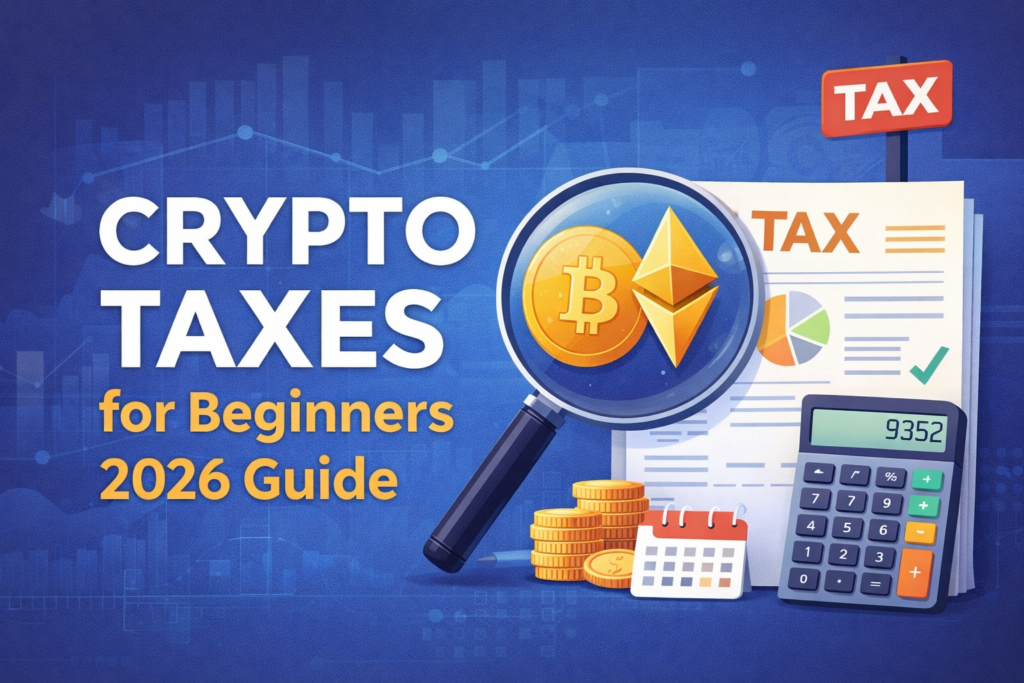
Crypto taxes for beginners explained with Bitcoin and Ethereum tax concepts in 2026

If you’re new to crypto, taxes probably aren’t the first thing on your mind.
Most beginners focus on which coin to buy, which exchange to use, or how to keep their assets safe.

I was the same.

But here’s the uncomfortable truth:
You can make money in crypto and still lose it later because of taxes.

This guide is written for real beginners, not accountants.
No jargon. No scare tactics. Just what actually matters in 2026.

This guide explains crypto taxes for beginners in 2026 in a simple, practical way.


Do You Really Have to Pay Taxes on Crypto?

Short answer: Yes, in most cases.

In many countries (including the U.S. and most OECD nations), crypto is treated as property, not cash.
That means tax rules apply when certain actions happen.

You usually owe taxes when you:

  • Sell crypto for fiat (USD, EUR, etc.)
  • Trade one coin for another
  • Use crypto to buy goods or services
  • Receive crypto as income (airdrop, mining, staking)

If you’re still at the “what is crypto?” stage, this guide may help first:
What Is Cryptocurrency and How Does It Work? (2026 Beginner’s Guide)


When You Don’t Pay Crypto Taxes

This part surprises many beginners.

You generally do NOT owe taxes when you:

  • Buy crypto and hold it
  • Transfer crypto between your own wallets
  • Move funds from exchange → personal wallet
  • Hold without selling or trading

That’s why long-term holders often talk about “tax efficiency.”

If you’re thinking about storage options, check this:
Best Cryptocurrency Wallets in 2026: Hot vs Cold Wallets for Beginners


Capital Gains vs Income (Explained Simply)

Crypto taxes usually fall into two categories.

1. Capital Gains

You made a profit by selling or trading crypto.

Example:

  • Buy ETH at $2,000
  • Sell at $3,000
  • The $1,000 profit is taxable

Holding longer may reduce tax rates in some countries.

2. Income

You received crypto as payment or reward.

Examples:

  • Staking rewards
  • Mining
  • Airdrops
  • Salary paid in crypto

These are often taxed at the time you receive them, based on market value.


The Biggest Tax Mistakes Beginners Make

I see these mistakes constantly:

  • ❌ Not tracking small trades
  • ❌ Assuming “crypto is anonymous”
  • ❌ Ignoring taxes until it’s too late
  • ❌ Losing transaction history
  • ❌ Trusting random Twitter advice

If you want to avoid beginner traps in general, this pairs well with:
Crypto Risk Management for Beginners in 2026: How to Protect Your Money


How to Track Crypto Taxes Without Losing Your Mind

You don’t need to be perfect. You just need to be consistent.

Basic tracking tips:

  • Keep exchange records (CSV downloads)
  • Save wallet addresses you control
  • Record dates, amounts, and prices
  • Don’t rely on memory

Many beginners use crypto tax software later, but even a simple spreadsheet is better than nothing.

For official guidance, these are reliable sources:

  • IRS Virtual Currency Guidance (U.S.)
  • OECD Crypto-Asset Reporting Framework
  • Local tax authority websites

IRS Virtual Currency Tax Guidance
OECD Crypto-Asset Reporting Framework

(Always check your country’s rules — they do differ.)


Is Crypto Tax Enforcement Really Increasing?

Yes — and quietly.

Governments are focusing less on “banning crypto” and more on reporting and compliance.

Exchanges now:

  • Share transaction data
  • Require identity verification
  • Cooperate with tax authorities

If you’re choosing a platform, safety and compliance matter:
Crypto Exchanges for Beginners in 2026: Fees, Safety & Ease of Use Compared


Final Thoughts (From One Beginner to Another)

Crypto isn’t just about charts and price predictions.
It’s about responsibility, especially once real money is involved.

You don’t need to be afraid of crypto taxes.
You just need to understand them before they surprise you.

If you’re building a long-term strategy, this article connects well with:
Crypto Portfolio Allocation for Beginners in 2026


Disclaimer

This article is for educational purposes only and does not constitute tax or financial advice. Always consult a qualified tax professional for your specific situation.
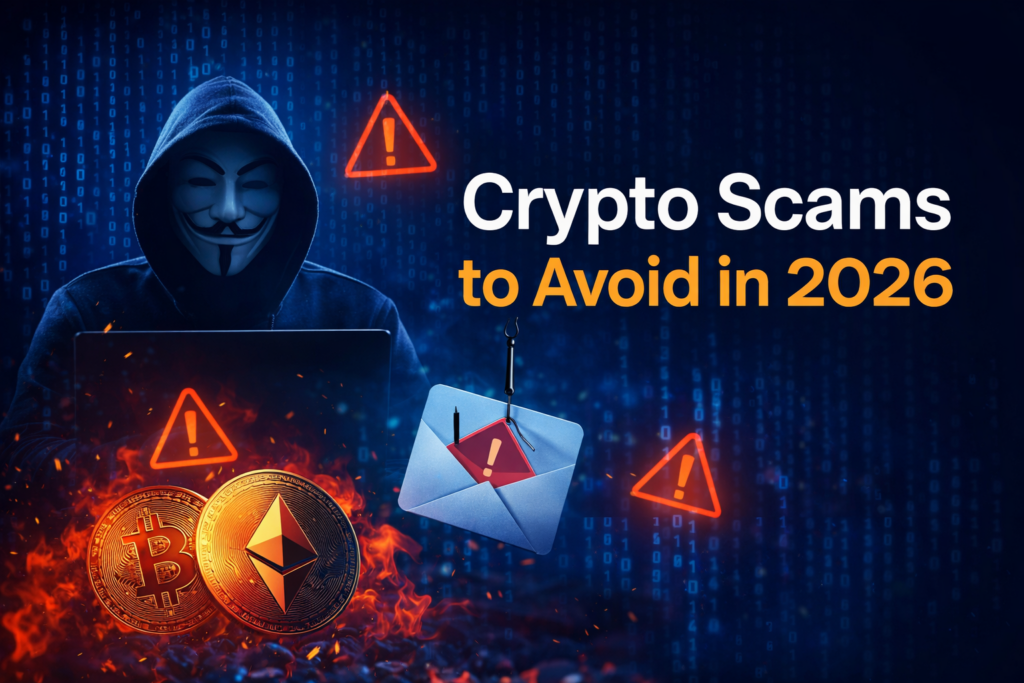
Crypto Scams to Avoid in 2026 (Real Examples & Protection Guide)

crypto scams 2026 warning guide for beginners

Crypto scams 2026 are becoming more advanced, using AI, fake DeFi platforms, and deepfake influencers to trick beginners into losing their money.

A complete beginner-friendly guide to the most common cryptocurrency scams in 2026, how they work, real-world examples, and step-by-step protection strategies to keep your money safe.


Why Crypto Scams Are Increasing in 2026

As cryptocurrency adoption grows, scammers are becoming more sophisticated. In 2026, fraud is no longer limited to fake giveaways or suspicious emails. Many scams now use:

  • AI-generated voices and deepfake videos
  • Fake DeFi platforms and copycat apps
  • Impersonation of real exchanges and influencers
  • Malware disguised as wallet software

The biggest risk is not technology — it’s human trust and urgency.


Top Crypto Scams in 2026 (With Real Examples)

1. Fake Exchange Websites

How it works: Scammers clone popular crypto exchange websites and run ads on Google, X (Twitter), or Telegram. When users log in, their credentials are stolen instantly.

Real example: A fake version of a major exchange appeared as a sponsored link on Google. Victims logged in, and their accounts were drained within minutes.

How to protect yourself:

  • Always bookmark official exchange websites
  • Never click sponsored crypto ads
  • Check the domain spelling carefully


2. Wallet Draining Smart Contracts

How it works: You connect your wallet to what looks like a DeFi site or NFT mint. The contract requests unlimited token approvals, giving attackers full access to your funds.

Real example: Users lost thousands of dollars after connecting MetaMask to a fake “airdrop claim” website shared in Discord channels.

How to protect yourself:

  • Use a hardware wallet for large balances
  • Review token approvals regularly
  • Never sign transactions you don’t understand


3. Deepfake Influencer Scams

How it works: AI-generated videos show famous crypto influencers or CEOs “announcing” giveaways or investment opportunities.

Real example: A deepfake livestream impersonated a well-known Bitcoin advocate, promising to double any crypto sent to a wallet address.

How to protect yourself:

  • No legitimate giveaway asks you to send crypto first
  • Verify announcements on official websites
  • Be suspicious of urgency and countdown timers


4. Fake Crypto Investment Groups

How it works: Scammers create Telegram or Discord groups posing as professional trading teams. They show fake profit screenshots and pressure users into sending funds.

Real example: A “VIP Signals Group” charged users $500 for access and later requested deposits into a shared wallet that disappeared.

How to protect yourself:

  • Never send funds to individuals or group wallets
  • Avoid guaranteed profit claims
  • Verify identities and track records independently


5. Malware Wallet Apps

How it works: Fake wallet apps appear in app stores or as browser extensions. They generate wallet addresses controlled by scammers.

Real example: A malicious Chrome extension imitating a popular wallet stole seed phrases and drained accounts automatically.

How to protect yourself:

  • Download wallets only from official websites
  • Check developer names and reviews
  • Use antivirus and browser security tools


The Most Dangerous Red Flags

If you see any of these, stop immediately:

  • “Guaranteed profits” or “risk-free returns”
  • Pressure to act fast
  • Requests for your private key or seed phrase
  • Unverified links sent via DM
  • Offers that sound too good to be true

According to the U.S. Federal Trade Commission (FTC), cryptocurrency scams remain one of the fastest-growing types of online fraud.


Step-by-Step Crypto Protection Checklist

1. Secure Your Wallet

  • Use a hardware wallet for long-term storage
  • Never store seed phrases digitally
  • Use a passphrase feature if available

2. Lock Down Your Accounts

  • Enable two-factor authentication (2FA)
  • Use a password manager
  • Create a unique email for crypto accounts

3. Verify Everything

  • Double-check URLs
  • Cross-check announcements
  • Use blockchain explorers to confirm transactions

4. Monitor Permissions

  • Revoke unused smart contract approvals
  • Regularly review wallet activity

MetaMask provides an official security guide explaining how to protect your wallet and avoid malicious approvals.


What to Do If You’ve Been Scammed

  1. Disconnect your wallet immediately
  2. Move remaining funds to a new wallet
  3. Revoke all token approvals
  4. Report the scam to the exchange and local cybercrime unit
  5. Warn others in the community

You can report crypto scams and check known fraudulent addresses on Chainabuse, a public blockchain abuse reporting platform.


Related Beginner Guides

Buy Cryptocurrency Safely in 2026: Step-by-Step Beginner’s Guide

Best Cryptocurrency Wallets in 2026: Hot vs Cold Wallets

Crypto Risk Management for Beginners in 2026


Final Thoughts

Crypto gives you full control over your money — and full responsibility for protecting it. In 2026, scams are smarter, faster, and more convincing than ever.

If you follow the protection steps in this guide, you will already be safer than most crypto users.

Stay skeptical. Stay secure. Protect your future.

Crypto Exchanges for Beginners in 2026: Fees, Safety & Ease of Use Compared

If you’re new to cryptocurrency, choosing the right exchange can feel overwhelming. Fees, security, ease of use, and regional availability all matter — and the “best” exchange depends on how you plan to buy, hold, and grow your crypto over time.

This beginner-friendly guide compares the top crypto exchanges in 2026 and helps you choose the safest and most cost-effective platform for your needs.


What Is a Crypto Exchange?

A crypto exchange is an online platform where you can:

  • Buy cryptocurrency with cash or cards
  • Trade one crypto for another
  • Store funds temporarily before moving them to a wallet

There are two main types:

Type Description Best For
Centralized Exchanges (CEX) Run by a company, require identity verification (KYC) Beginners, easy buying, customer support
Decentralized Exchanges (DEX) Peer-to-peer, no company holds your funds Advanced users, privacy-focused traders

Beginners should start with a trusted centralized exchange for safety and simplicity.


How We Compare Exchanges

We ranked platforms using five beginner-focused criteria:

  1. Security & Regulation – Cold storage, audits, insurance, legal compliance
  2. Fees – Trading, deposit, and withdrawal costs
  3. Ease of Use – App design, onboarding, tutorials
  4. Payment Methods – Bank transfer, card, regional support
  5. Customer Support – Live chat, help centers, response speed

This guide compares the most trusted crypto exchanges for beginners 2026 based on fees, security, and ease of use.


Best Crypto Exchanges for Beginners in 2026 (Comparison Table)

Exchange Best For Trading Fees Security Ease of Use Regions Supported
Coinbase First-time buyers ~0.4%–0.6% Very High ⭐⭐⭐⭐⭐ US, EU, Global
Binance Low fees & variety ~0.1% High ⭐⭐⭐⭐ Global (Limited in some regions)
Kraken Security-focused users ~0.16%–0.26% Very High ⭐⭐⭐⭐ US, EU, Global
Bybit Simple trading & derivatives ~0.1% High ⭐⭐⭐⭐ Asia, EU, Global
Gemini Regulation & compliance ~0.35% Very High ⭐⭐⭐⭐ US, Select Global

Choosing the right crypto exchanges for beginners in 2026 is one of the most important steps to investing safely and avoiding unnecessary fees.


1. Coinbase – Best for Absolute Beginners

Why choose Coinbase?

  • Clean, simple interface
  • Strong regulation and compliance
  • Educational rewards (earn crypto while learning)

Pros:

  • Easy bank and card purchases
  • High security standards
  • Excellent mobile app

Cons:

  • Higher fees than most competitors

Best for: First-time crypto buyers who want a stress-free experience.


2. Binance – Best for Low Fees & Large Selection

Why choose Binance?

  • Largest crypto exchange by volume
  • Hundreds of coins available
  • Industry-leading low fees

Pros:

  • Cheapest trading costs
  • Advanced tools for when you grow

Cons:

  • Interface can feel complex
  • Regulatory restrictions in some countries

Best for: Beginners who plan to grow into more advanced trading.


3. Kraken – Best for Security-Focused Users

Why choose Kraken?

  • One of the longest-running crypto exchanges
  • Strong transparency and audits

Pros:

  • Excellent security reputation
  • Competitive fees

Cons:

  • Interface less beginner-friendly

Best for: Users who value safety over flashy design.


4. Bybit – Best for Simple Trading Tools

Why choose Bybit?

  • Clean trading dashboard
  • Strong customer support

Pros:

  • Fast order execution
  • Beginner-friendly trading modes

Cons:

  • Limited fiat options in some regions

Best for: Users transitioning from beginner to intermediate trading.


5. Gemini – Best for Regulation & Compliance

Why choose Gemini?

  • US-based and highly regulated
  • Insurance-backed custody options

Pros:

  • High trust factor
  • Clean interface

Cons:

  • Limited coin selection
  • Moderate fees

Best for: Long-term investors who prioritize legal compliance.


Fee Breakdown Explained

Understanding fees can save you hundreds over time.

Fee Type What It Means
Trading Fee Charged when you buy or sell crypto
Deposit Fee Cost to add money to your account
Withdrawal Fee Cost to move crypto or cash out

Tip: Bank transfers are usually cheaper than card purchases.

When comparing crypto exchanges for beginners 2026, always look at withdrawal fees, security features, and local regulatory support.


Safety Checklist for Beginners

Before using any exchange, make sure it offers:

  • ✅ Two-factor authentication (2FA)
  • ✅ Cold storage for most user funds
  • ✅ Withdrawal confirmations
  • ✅ Regulatory registration

Never store large amounts on an exchange long-term. Use a personal crypto wallet instead.


Beginner Mistakes to Avoid

  • Using only a password (always enable 2FA)
  • Falling for fake exchange websites
  • Leaving all funds on the exchange
  • Ignoring withdrawal fees


Best Exchange by User Type

User Type Recommended Exchange
First-time buyer Coinbase
Low-cost trader Binance
Security-focused investor Kraken
Learning trader Bybit
Compliance-first investor Gemini


How to Get Started (Step-by-Step)

  1. Choose an exchange
  2. Create an account
  3. Verify your identity (KYC)
  4. Add a payment method
  5. Buy your first cryptocurrency
  6. Transfer to a personal wallet for safety


Frequently Asked Questions

Are crypto exchanges safe in 2026?

Most major exchanges use strong security systems, but no platform is risk-free. Always use personal wallets for long-term storage.

Which exchange has the lowest fees?

Binance typically offers the lowest trading fees for most users.

Do I need ID verification?

Yes, most regulated exchanges require identity verification.

Can I use multiple exchanges?

Yes. Many users keep accounts on 2–3 platforms for flexibility.


Related Beginner Guides


Trusted External Resources


Final Thoughts

The best crypto exchange for beginners in 2026 depends on your priorities:

  • Safety & simplicity: Coinbase
  • Low fees & growth: Binance
  • Security-first investing: Kraken

Start small, learn the basics, and move your crypto to a personal wallet as your confidence grows.


Disclaimer: This content is for educational purposes only and does not constitute financial advice. Cryptocurrency investments carry risk. Always do your own research or consult a financial professional before investing.

Crypto Portfolio Allocation for Beginners in 2026: How to Build a Balanced Investment Strategy


This crypto portfolio allocation for 2026 guide is designed to help beginners build a balanced, low-stress investment strategy for long-term growth.

Introduction: Why a Portfolio Matters More Than Picking the “Best Coin”

When most beginners enter crypto, they usually ask one simple question:

“Which coin will go up the most in 2026?”

The truth is, long-term success rarely comes from finding the perfect coin. It comes from building a balanced portfolio that can survive bad markets, benefit from good ones, and help you sleep at night when prices swing 10–20% in a single day.

In this guide, I’ll walk you through a simple, beginner-friendly crypto portfolio strategy for 2026 — no complex trading, no technical jargon, just a clear framework you can actually follow.

If you’re completely new, start here first:

👉 [What Is Cryptocurrency and How Does It Work? (2026 Beginner’s Guide)]

👉 [Buy Cryptocurrency Safely in 2026: Step-by-Step Beginner’s Guide]


Step 1: Understand the Three Building Blocks of a Crypto Portfolio

Think of your crypto portfolio like a house. It needs a foundation, growth engine, and experimental space.

1. The Foundation (Stability Layer)

This part is designed to survive market crashes.

Examples:

These are the most established cryptocurrencies, with the largest user base, strongest network security, and the most institutional adoption.

2. The Growth Layer

This is where you aim for higher returns — with higher risk.

Examples:

  • Layer-2 networks
  • DeFi platforms
  • Infrastructure tokens

These can outperform BTC and ETH in bull markets, but they also fall harder in bear markets.

3. The Experimental Layer

This is your “optional” section.

Examples:

  • New projects
  • Trend-based tokens (AI, gaming, RWA, etc.)

Only invest what you’re fully prepared to lose here.


Step 2: A Simple Beginner Portfolio Model for 2026

Crypto Portfolio Allocation for 2026: A Simple Beginner Model

Here’s a clean, realistic allocation model that works well for most beginners:

Category Allocation Purpose
Bitcoin (BTC) 40–50% Long-term stability and store of value
Ethereum (ETH) 25–35% Smart contract ecosystem and growth
Growth Altcoins 10–20% Higher return potential
Experimental / Cash 5–10% Flexibility and learning capital

You don’t need to hit these percentages perfectly. The goal is direction, not perfection.

A clear crypto portfolio allocation for 2026 helps beginners stay focused on long-term diversification instead of reacting to short-term market noise.


Step 3: Where to Store Your Portfolio Safely

Your strategy is only as strong as your security.

For long-term holdings (BTC and ETH), consider using a cold wallet to reduce hacking risk. For active buying and selling, a hot wallet or exchange wallet can be more convenient.

If you’re unsure about wallet types, this guide breaks it down clearly: 👉 [Best Cryptocurrency Wallets in 2026: Hot vs Cold Wallets for Beginners]


Step 4: How to Invest Over Time (Instead of Timing the Market)

Trying to buy at the “perfect bottom” usually leads to stress and bad decisions.

A beginner-friendly method is Dollar-Cost Averaging (DCA):

  • Invest a fixed amount (weekly or monthly)
  • Buy regardless of price
  • Let time smooth out volatility

This strategy helps remove emotion from your investing and builds discipline.


Step 5: Risk Management Rules You Should Never Ignore

Even a good portfolio can fail without risk control.

Basic rules:

  • Never invest money you need for rent, food, or emergencies
  • Avoid putting more than 10% into any single high-risk altcoin
  • Keep a small cash reserve for opportunities or emergencies

For a deeper breakdown, read:

  • 👉 [Crypto Risk Management for Beginners in 2026: How to Protect Your Money]


Bitcoin vs Ethereum: How They Fit in Your Portfolio

Many beginners feel forced to “choose” between Bitcoin and Ethereum.

You don’t have to.

They play different roles:

  • Bitcoin: Digital gold, long-term value storage
  • Ethereum: Infrastructure for apps, finance, and digital assets

If you want a full comparison, check this guide: 👉 [Bitcoin vs Ethereum in 2026: Which Is Better for Beginners?]


Step 6: Rebalancing — The Secret Most Beginners Miss

Over time, one part of your portfolio will grow faster than the others.

Rebalancing means:

  • Selling a little of what grew too much
  • Buying what fell behind

A simple rule:

Review your portfolio every 3–6 months and bring it back close to your original percentages.

This helps lock in gains and control risk without constant trading.

***Learn more about diversification and rebalancing at Investopedia


Common Beginner Mistakes (And How to Avoid Them)

  1. Chasing hype on social media
  2. All-in on one coin
  3. Ignoring security
  4. Panic selling during dips

A good portfolio strategy is boring — and that’s a good thing.


Final Thoughts: Keep It Simple and Stay Consistent

You don’t need a complicated system to succeed in crypto.

A strong beginner portfolio in 2026 is built on:

  • Solid foundations (BTC & ETH)
  • Controlled growth (altcoins)
  • Smart risk management
  • Consistent investing habits

If you follow these principles, you’ll already be ahead of most new investors.


Related Guides


Disclaimer: This article is for educational purposes only and does not constitute financial advice. Cryptocurrency investments involve risk, and you should only invest what you can afford to lose.

Crypto Risk Management for Beginners in 2026: How to Protect Your Money

Crypto risk management for beginners 2026 starts with one simple idea: protect your money before you try to grow it.

If you’ve spent more than five minutes around crypto, you’ve probably heard a success story.

Someone turned $500 into $5,000. Someone else “timed the bottom.” A friend of a friend bought Bitcoin years ago and now drives a nicer car.

What you don’t hear as often are the quiet stories — the people who bought during the hype, panicked during the crash, and slowly walked away from crypto altogether.

This guide is for you if you don’t want to be one of those stories.

Crypto risk management isn’t about winning big. It’s about staying in long enough to win at all.

If you’re completely new, it helps to understand the basics first. You can start here: 👉 What Is Cryptocurrency and How Does It Work? (2026 Beginner’s Guide for Investors)


Crypto Risk Management for Beginners: What It Really Means

In simple terms, risk management means this:

You decide how much you’re willing to lose before you think about how much you might gain.

That sounds obvious. Almost no one actually does it.

In traditional investing, people talk about diversification, time in the market, and steady contributions. In crypto, you still need all of that — plus a plan for:

  • Sudden price swings that happen in minutes, not months
  • Exchanges freezing withdrawals
  • Hacks, phishing links, and fake “support” messages
  • Your own emotions when the chart goes vertical (up or down)

A good risk system protects you from the market — and from yourself.


The Rule That Saves Most Beginners

You’ve probably heard this before:

Never invest money you can’t afford to lose.

Here’s a more practical version.

Ask yourself this:

If this went to zero tomorrow, would my real life change?

Would you still pay rent? Still sleep нормально? Still enjoy your day?

If the answer is no, your position is too big.

Many beginners in 2026 treat crypto like a savings account. It isn’t. Think of it as a high-risk growth corner of your overall financial plan.

A simple starting model looks like this:

  • 70–90%: Traditional assets (stocks, ETFs, cash, bonds)
  • 5–20%: Cryptocurrency

You can always increase your crypto exposure later. First, prove to yourself that you can survive a big red day without making a bad decision.


Don’t Fall in Love With One Coin

Every cycle has a “favorite.”

One year it’s a new Layer 1. Another year it’s an AI token. The story is always the same: “This one is different.”

Sometimes it is. Often, it isn’t.

A simple beginner portfolio in 2026 might look like this:

  • 50–60%: Large, established coins (Bitcoin, Ethereum)
  • 20–30%: Mid-sized projects
  • 10–20%: High-risk, high-reward ideas

This won’t make you rich overnight.

What it can do is make sure one bad bet doesn’t end your entire crypto journey.


Where You Store Your Crypto Matters More Than You Think

Most beginners focus on what to buy.

Very few think seriously about where it lives.

Exchanges are convenient. They’re also businesses. They can be hacked, frozen, or shut down. When that happens, your money can be stuck.

That’s why many long-term investors follow this simple rule:

Trade on exchanges. Store in wallets.

There are two main types of wallets:

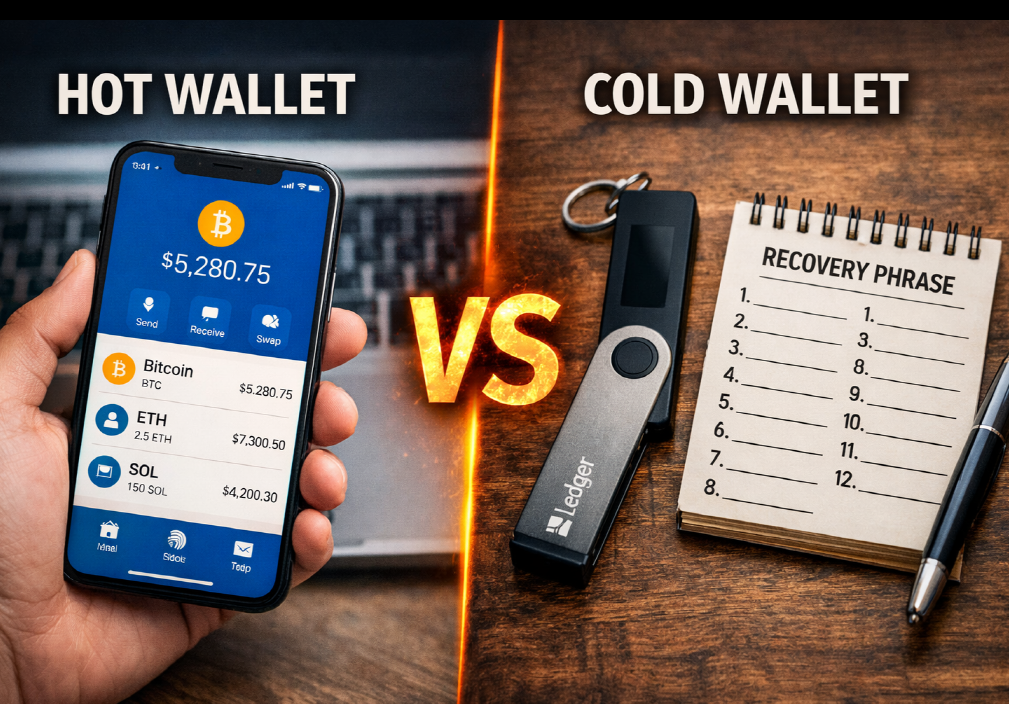
  • Hot wallets – Connected to the internet, easy for daily use
  • Cold wallets – Offline, slower, but much harder to hack

If you want a clear breakdown of both, this guide walks through it step by step: 👉 Best Cryptocurrency Wallets in 2026: Hot vs Cold Wallets for Beginners


The One Skill That Quietly Protects Your Account

It’s called position sizing.

Most people never learn it. They just “buy an amount that feels right.”

Position sizing means you decide how much of your total portfolio goes into a single idea.

A simple rule many long-term investors use:

Never risk more than 1–5% of your total portfolio on one trade or coin.

Example:

If your crypto portfolio is $1,000:

  • A 2% risk means no single mistake should cost you more than $20

It sounds small.

Over time, it’s the difference between surviving ten bad trades — or being wiped out by one.


Emotional Trading Is the Real Enemy

Crypto is designed to mess with your head.

  • Green candles → “What if this keeps going up?”
  • Red candles → “What if it never comes back?”

This is how people end up buying high and selling low.

A simple system that actually works:

  • Write down why you’re buying
  • Decide where you’ll take profit
  • Decide where you’ll accept a loss

Do this before you click the buy button.

Once you’re in, follow the plan — not the chart.

For anyone learning crypto risk management for beginners 2026, having a written plan can reduce emotional trading and improve long-term results.


Learn to Recognize the Market’s Mood

Crypto doesn’t move in straight lines. It moves in phases:

  1. Quiet accumulation
  2. Steady uptrend
  3. Hype and headlines
  4. Sharp correction
  5. Slow recovery

Most beginners arrive during phase 3.

Risk management means knowing when the goal shifts from “buy more” to “protect what I already have.”


Common Scams in 2026 (Still Working on Smart People)

The technology cshanges. The tricks stay the same.

Watch out for:

  • “Guaranteed” profits
  • Messages pretending to be wallet or exchange support
  • Links that rush you to “verify” your account
  • Fake apps and clone websites

If someone is pushing urgency, pause. Real financial opportunities don’t need pressure.

For broader consumer safety advice, you can also check: 👉 U.S. Federal Trade Commission — Cryptocurrency Scams Guide


A Simple Risk Plan You Can Actually Follow

You don’t need a spreadsheet or a trading desk.

Start with four questions:

1. Allocation — What percentage of your total money goes into crypto?

2. Storage — What stays on exchanges, and what goes into a wallet?

3. Limits — How much can you lose on one idea without stress?

4. Exit — When will you take profit?

Write the answers down. Revisit them every few months. Adjust as your experience grows.


Final Thoughts

Most people in crypto focus on how much they could make.

The people who last focus on how much they won’t let themselves lose.

If you learn risk management early, you gain something more valuable than a lucky trade:

Time. And time is where real compounding happens.


Continue Your Beginner’s Path

If you want a clean, simple foundation, these guides connect naturally:

Learning first is still the safest investment in crypto.


Disclaimer: This article is for educational purposes only and does not constitute financial advice. Cryptocurrency investments involve risk, and you should only invest what you can afford to lose.

Best Cryptocurrency Wallets in 2026: Hot vs Cold Wallets for Beginners

If you’re searching for the best crypto wallets 2026, this guide explains the difference between hot and cold wallets and helps beginners choose a safe place to store their cryptocurrency.

If you already know what cryptocurrency is and how to buy it safely, the next question usually comes up pretty fast:

“Okay… where do I actually keep this stuff?”

A lot of beginners don’t lose money because they chose the wrong coin. They lose it because they clicked the wrong link, downloaded a fake app, or stored their recovery phrase in the wrong place.

In this guide, I’ll walk you through:

  • What a crypto wallet really does (in plain English)
  • The difference between hot wallets and cold wallets
  • The wallets beginners tend to like most in 2026
  • How to pick something that fits how you plan to use crypto

If you haven’t bought crypto yet, this step-by-step beginner’s guide to buying cryptocurrency safely in 2026 will save you a lot of stress later.


What Is a Cryptocurrency Wallet? (Best Crypto Wallets 2026 for Beginners)

A crypto wallet doesn’t actually “hold” your coins. That part confuses almost everyone at first.

Your crypto lives on the blockchain.
Your wallet just holds the private key — basically the password that proves those coins belong to you.

An easy way to picture it:

  • The blockchain is a huge digital vault
  • Your wallet is your personal key to one small section of it

Lose that key, and there’s no “forgot password” button. That’s why wallets matter so much.


Hot Wallet vs Cold Wallet (Quick Overview)

Hot Wallets — Easy and Always Online

Hot wallets are connected to the internet. They’re what most people start with.

Good for:

  • Checking balances quickly
  • Sending and receiving crypto
  • Small amounts you use often

Why people like them:

  • Simple setup
  • Fast to use
  • Usually free

Downsides:

  • More exposed to phishing and fake apps
  • Security depends on your phone or browser


Cold Wallets — Offline and Built for Safety

Cold wallets stay offline. Think of them more like a safe than a wallet.

Good for:

  • Long-term storage
  • Larger amounts of crypto you don’t touch often

Why people like them:

  • Very hard to hack remotely
  • Great peace of mind

Downsides:

  • You usually have to buy the device
  • Takes a little longer to use


Best Hot Wallets for Beginners in 2026

Trust Wallet

Best for: Simple mobile use

Trust Wallet is often the first wallet people try. It’s straightforward, supports most popular coins, and doesn’t overwhelm you with settings.

What stands out:

  • Free and quick to set up
  • Supports Bitcoin, Ethereum, and many tokens
  • Built-in swaps and basic staking


MetaMask

Best for: NFTs, DeFi, and exploring Web3

If you plan to touch NFTs or decentralized apps, you’ll probably run into MetaMask sooner or later.

What stands out:

  • Works on browsers and phones
  • Connects to most Web3 platforms
  • You stay in control of your keys


Coinbase Wallet

Best for: Moving away from exchanges

If you already use Coinbase, this wallet feels familiar but gives you more control than leaving funds on the exchange.

What stands out:

  • Easy transfers from Coinbase
  • Clean, beginner-friendly design
  • Supports NFTs and apps


Best Cold Wallets for Maximum Security

Ledger Nano X

Best for: Long-term holders

Ledger is popular with people who treat crypto like a long-term investment rather than something they trade every day.

Why people trust it:

  • Strong security hardware
  • Works with many coins and apps
  • Can connect to your phone with Bluetooth


Trezor Model T

Best for: Transparency and open-source fans

Trezor is known for being open about how its software works, which a lot of security-focused users appreciate.

Why people trust it:

  • Touchscreen interface
  • Open-source firmware
  • Long track record in crypto


How to Choose the Right Wallet

Instead of looking for the “best” wallet, ask a few simple questions:

  • Will I use crypto often?
    If yes, a hot wallet is more comfortable.
  • Am I mostly holding for the long term?
    A cold wallet makes more sense.
  • Do I want to try NFTs or DeFi?
    Something like MetaMask will fit better.

A lot of people end up using both — one for daily use, one for savings.


Safety Tips That Actually Matter

You don’t need to be a security expert. Just follow a few habits:

  • Never share your recovery phrase, no matter what
  • Write your backup on paper, not in cloud notes
  • Double-check links before connecting a wallet
  • Use hardware wallets for long-term storage
  • Only download apps from official websites or app stores

You can also learn more about blockchain security basics on the official Ethereum website.


Hot vs Cold Wallet — Side-by-Side

Feature Hot Wallet Cold Wallet
Internet Yes No
Security Medium High
Ease of Use Very Easy Moderate
Best For Daily use Long-term storage


Final Thoughts

There’s no perfect wallet for everyone.

A simple, practical setup is:

  • A hot wallet for everyday use
  • A cold wallet for long-term holdings

That way, you don’t have to choose between convenience and safety — you get both.


FAQ

Is it safe to keep crypto on an exchange?

It’s fine for short-term trading, but if you’re holding for months or years, a personal wallet is usually the safer option.

What if I lose my wallet?

Don’t worry! If you still have your recovery phrase, you can restore everything. Without it, there’s no way to get your crypto back.


Disclaimer: This article is for educational purposes only and does not constitute financial advice. Cryptocurrency investments involve risk. Only invest what you can afford to lose.

Buy Cryptocurrency Safely in 2026: Step-by-Step Beginner’s Guide

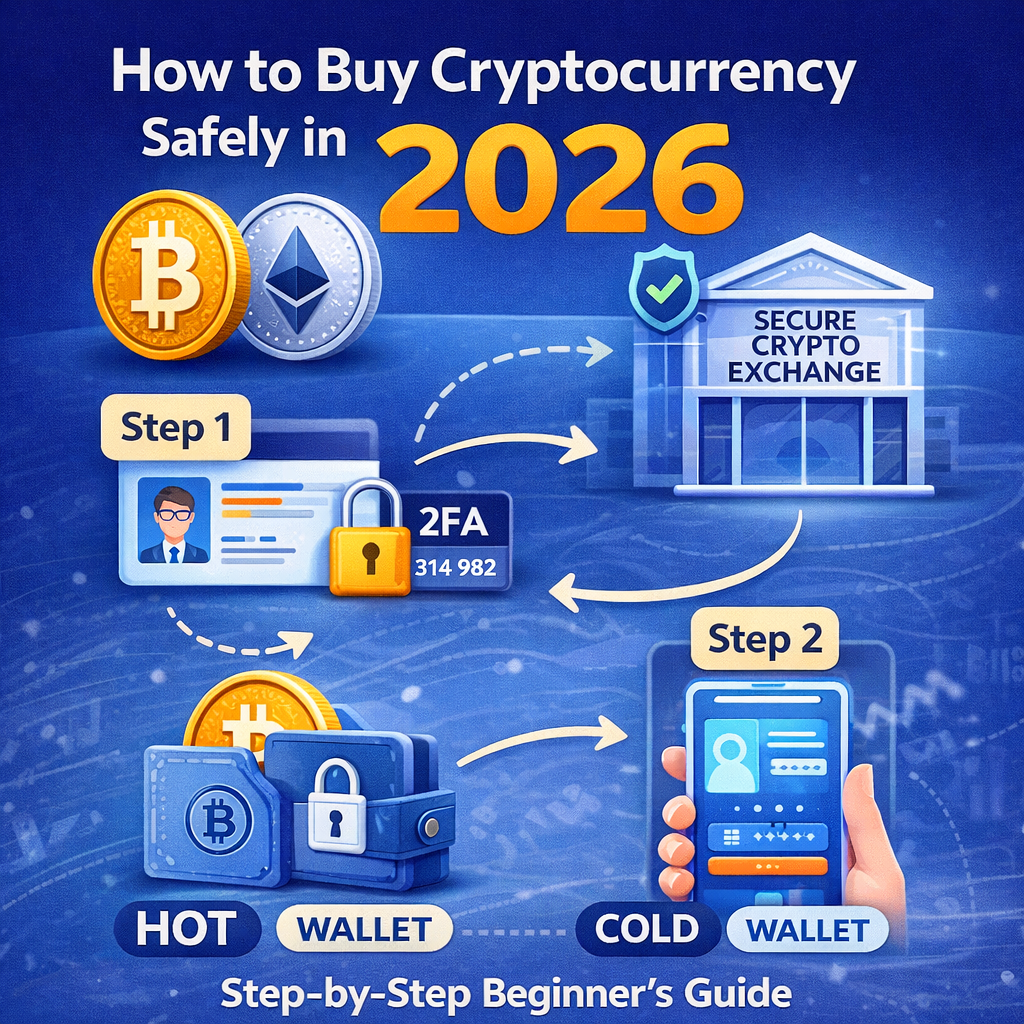
buy cryptocurrency safely step by step beginner guide 2026

If you want to buy cryptocurrency safely in 2026, this beginner-friendly guide will walk you through every step to protect your money and avoid common scams.

Introduction: Why Safety Matters More Than Ever in 2026

Cryptocurrency has become more accessible than ever in 2026. With new investors entering the market every day, buying crypto is no longer limited to tech experts or professional traders. However, this accessibility has also attracted scammers, hackers, and fraudulent platforms.

If you are new to crypto, learning how to buy cryptocurrency safely is just as important as learning what cryptocurrency is. One wrong click, weak password, or fake website can result in the permanent loss of your funds.

If you haven’t read our beginner guide yet, start here:
What Is Cryptocurrency and How Does It Work? (2026 Beginner’s Guide for Investors)

In this guide, you will learn a clear, step-by-step process to buy your first cryptocurrency securely and confidently.


What You Need Before Buying Cryptocurrency

Before you buy any crypto, prepare these essential items:

1. A Secure Internet Connection

Avoid using public Wi-Fi. Always use a private and trusted network to prevent data interception.

2. A Valid ID

Most regulated crypto exchanges require identity verification (KYC) to comply with international regulations.

3. A Strong Email and Password

Use a dedicated email address for crypto accounts and a unique, complex password that you do not use anywhere else.

4. A Basic Understanding of Risk

Crypto prices can move up and down rapidly. Never invest money you cannot afford to lose.


Step 1: Choose a Safe Exchange to Buy Cryptocurrency Safely

A crypto exchange is a platform where you can buy, sell, and store digital assets. Choosing a reputable exchange is your first and most important security decision.

What to Look For in a Safe Exchange

  • Regulation and Compliance in major countries
  • Two-Factor Authentication (2FA)
  • Strong Security History
  • Transparent Fees
  • Responsive Customer Support

Examples of Beginner-Friendly Exchanges

  • Binance
  • Coinbase
  • Kraken
  • Bitstamp

Always double-check the website URL to avoid phishing sites. Bookmark the official site once you find it.


Step 2: Create and Verify Your Account

Once you choose an exchange, follow these steps:

  1. Sign up using your dedicated email address
  2. Create a strong password (12+ characters with symbols and numbers)
  3. Enable Two-Factor Authentication immediately
  4. Complete identity verification (upload ID and selfie)

Verification can take anywhere from a few minutes to a few days depending on the platform.


Step 3: Secure Your Account Like a Pro

Most beginners lose funds not because of bad investments, but because of poor security.

Must-Do Security Settings

  • Enable 2FA (Google Authenticator or Authy, not SMS only)
  • Activate Anti-Phishing Codes
  • Set up Withdrawal Whitelists
  • Turn on Login Alerts

These features make it much harder for hackers to access your funds even if they get your password.


Step 4: Add Funds to Your Exchange Account

You can usually fund your account using:

  • Bank transfer
  • Debit or credit card
  • Third-party payment services

Bank transfers often have lower fees, while cards are faster but more expensive.


Step 5: Buy Your First Cryptocurrency (Bitcoin or Ethereum Example)

For beginners, it’s best to start with well-established cryptocurrencies such as:

  • Bitcoin (BTC)
  • Ethereum (ETH)

Simple Buying Process

  1. Go to “Buy Crypto” or “Trade”
  2. Select BTC or ETH
  3. Enter the amount you want to invest
  4. Review fees and final amount
  5. Confirm your purchase

Your crypto will appear in your exchange wallet within seconds or minutes. Following these steps will help you buy cryptocurrency safely and reduce the risk of losing your funds as a beginner.

For real-time cryptocurrency market data, you can also check CoinMarketCap’s global crypto rankings.


Step 6: Store Your Crypto Safely (Hot Wallet vs Cold Wallet)

Leaving crypto on an exchange is convenient but not always the safest option for long-term storage.

Hot Wallet

  • Connected to the internet
  • Easy to use
  • Higher hacking risk

Cold Wallet

  • Offline storage (hardware wallets)
  • Very secure
  • Best for long-term investors

If you plan to hold crypto for months or years, consider using a cold wallet for better protection.


Common Mistakes Beginners Make

Avoid these costly errors:

  • Clicking links from emails or social media
  • Using weak passwords
  • Sending crypto to the wrong address
  • Investing based on hype or “guaranteed profit” claims
  • Keeping large amounts on exchanges long-term

Following these steps will help you buy cryptocurrency safely and reduce the risk of losing your funds as a beginner.


How Much Money Should You Start With?

A good rule for beginners is to start small. Think of your first investment as tuition for learning, not a way to get rich quickly.

If you want a deeper guide on building a beginner-friendly investment plan, read:
How Much Money Should You Invest in Crypto as a Beginner?


Frequently Asked Questions (FAQ)

Is cryptocurrency legal in 2026?

In most countries, yes. However, regulations vary by region. Always check your local laws and tax requirements.

Can I lose all my money in crypto?

Yes. Crypto is highly volatile. Prices can rise and fall quickly, and there is no government protection like traditional bank accounts.

What is the safest crypto for beginners?

Bitcoin and Ethereum are generally considered the safest starting options due to their size, security, and long-term adoption.


Conclusion: Safety First, Profits Second

Buying cryptocurrency safely is not complicated, but it does require discipline and awareness. By following the steps in this guide, you dramatically reduce the risk of scams, hacks, and beginner mistakes.

Crypto is a powerful financial tool when used responsibly. Take your time, learn continuously, and always prioritize security over speed.


Disclaimer: This article is for educational purposes only and does not constitute financial advice. Cryptocurrency investments involve risk, and you should only invest what you can afford to lose.

What Is Cryptocurrency and How Does It Work? (2026 Beginner’s Guide for Investors)

Cryptocurrency inforgraphic showing how Bitcoin, blockchain, and digital wallets work

Cryptocurrency is one of the most talked-about financial innovations of the last decade. From Bitcoin to Ethereum, millions of people are now using digital currencies to invest, transfer money, and explore new financial systems.

If you are a beginner, this guide will explain what cryptocurrency is, how it works, and how you can safely get started in 2026.


What Is Cryptocurrency?

What is Crytocurrency? a cryptocurrency is a digital form of money that exists only online. Unlike traditional currencies such as the US dollar, cryptocurrencies are not controlled by a central bank or government. Instead, they use a technology called blockchain to verify and record transactions.

The first and most famous cryptocurrency is Bitcoin, created in 2009. Since then, thousands of other cryptocurrencies have been developed, including Ethereum, Solana, and USDC.


How Does Cryptocurrency Work?

Cryptocurrency runs on a system called a blockchain, which is a public digital ledger.

Simple Explanation:

  1. You send crypto to someone.
  2. The transaction is broadcast to a network of computers (called nodes).
  3. The network verifies the transaction.
  4. The transaction is added to a block.
  5. The block is permanently recorded on the blockchain.

This process makes crypto transparent, secure, and difficult to alter or fake.


What Is Blockchain Technology?

A blockchain is a chain of digital blocks, each containing:

  • Transaction data
  • A timestamp
  • A link to the previous block

Because every block is connected, changing one transaction would require changing the entire chain, which is nearly impossible on large networks like Bitcoin and Ethereum.


What Is Cryptocurrency? Types of Cryptocurrencies

what is cryptocurrency

1. Bitcoin (BTC)

  • The first cryptocurrency
  • Often called “digital gold”
  • Used mainly as a store of value

2. Ethereum (ETH)

  • Supports smart contracts
  • Used for decentralized apps (DeFi and NFTs)

3. Stablecoins (USDC, USDT)

  • Pegged to the US dollar
  • Used for trading and transfers

4. Altcoins

  • All other cryptocurrencies
  • Examples: Solana, Cardano, Avalanche


How to Buy Cryptocurrency in the US

To buy crypto, you need a cryptocurrency exchange.

Basic Steps:

  1. Choose a regulated exchange
  2. Create an account and verify your identity
  3. Deposit
  4. Buy your chosen cryptocurrency
  5. Store it in a wallet


What Is a Crypto Wallet?

A crypto wallet stores the private keys that give you access to your cryptocurrency.

Types of Wallets:

  • Hot Wallets – Online (mobile apps, browser wallets)
  • Cold Wallets – Offline (hardware wallets)

For beginners, a combination of both is usually the safest approach.


Is Cryptocurrency Legal in the United States?

Yes, cryptocurrency is legal in the US. However:

  • Exchanges must follow US regulations
  • Crypto transactions may be taxable
  • You must report gains to the IRS


Is Cryptocurrency Safe?

Crypto is secure by design, but users can still lose money due to:

  • Scams
  • Hacking
  • Poor security practices
  • Market volatility

Safety Tips:

  • Use strong passwords
  • Enable two-factor authentication
  • Never share your private keys
  • Avoid unknown websites and fake apps


Risks of Investing in Cryptocurrency

Cryptocurrency is a high-risk investment. Prices can change quickly, sometimes within minutes.

Main risks include:

  • Market volatility
  • Regulatory changes
  • Platform failures
  • Security breaches

Always invest only what you can afford to lose.


Why Do People Invest in Crypto?

People invest in cryptocurrency for:

  • Potential high returns
  • Diversification
  • Protection against inflation
  • Access to decentralized finance

However, success requires education, patience, and strong risk management.


What Is Cryptocurrency? Frequently Asked Questions (FAQ)

Is cryptocurrency real money?

Yes, but it is digital. Some businesses and platforms accept crypto as payment.

How much money do I need to start?

Many US exchanges allow you to start with as little as $10–$50.

Can I lose all my money?

Yes. Crypto markets are volatile. Always manage risk carefully.

Do I need to report crypto taxes?

Yes. In the US, crypto transactions are taxable in most cases.


Final Thoughts

What Is Cryptocurrency? Cryptocurrency is changing how people think about money, investing, and financial freedom. While it offers exciting opportunities, it also comes with serious risks.

If you are just getting started, focus on learning the basics, using trusted platforms, and building safe habits before making large investments.


External Reference

According to the IRS cryptocurrency tax guidelines, crypto transactions may be taxable in the US.

Learn more from the SEC’s investor guidance on digital assets


Disclaimer: This content is for educational purposes only and does not constitute financial or investment advice. Always consult a licensed financial professional before making investment decisions.